Swept Path Analysis (Vehicle Tracking)
Ensuring Vehicles Can Access and Manoeuvre Safely
Whether it is a refuse vehicle serving a residential development, a delivery lorry accessing a commercial site or a fuel tanker entering a petrol filling station, demonstrating that vehicles can safely manoeuvre within a development is often a key planning requirement.
DW Transportation provides swept path analysis (also known as vehicle tracking) to demonstrate that vehicles can enter, manoeuvre within and leave a site safely and efficiently. Using specialist software and practical transport planning experience, we produce clear vehicle tracking drawings that support planning applications and help resolve Highway Authority concerns.
What is Swept Path Analysis?
Swept path analysis is the process of modelling the movement of vehicles to demonstrate that they can safely navigate a proposed development without conflicting with buildings, parking spaces, landscaping, pedestrians or other highway features.
It provides planners, Highway Authorities and developers with confidence that the proposed layout is practical and capable of accommodating the vehicles expected to use the site.
Vehicle tracking is commonly required for residential, commercial, retail, industrial and mixed-use developments.
When is Vehicle Tracking Required?
Swept path analysis may be required where a development includes:
New site access arrangements
Internal roads and turning areas
Refuse vehicle access
Delivery and servicing areas
Petrol filling stations
Drive-through restaurants
Commercial and industrial developments
Emergency vehicle access
Large residential developments
Car parks and servicing yards
Highway Authorities frequently request vehicle tracking where there is any uncertainty over whether larger vehicles can safely manoeuvre within a site.
Practical Solutions, Not Just Drawings
Effective swept path analysis is about much more than demonstrating that a vehicle physically fits within a site.
We consider how vehicles are likely to operate in practice, identifying opportunities to improve layouts, reduce conflicts and create safer, more efficient vehicle movements.
Where necessary, we work closely with clients and the wider design team to refine layouts before planning applications are submitted, helping to reduce delays and avoid unnecessary Highway Authority objections.
Our Experience
DW Transportation has undertaken swept path analysis for a wide range of developments, including:
Residential developments
Convenience stores
Petrol filling stations
Drive-through restaurants
Commercial developments
Industrial sites
Mixed-use developments
Our experience includes assessing refuse vehicles, rigid delivery vehicles, articulated vehicles, fuel tankers and emergency service vehicles, ensuring layouts are practical as well as technically compliant.
Why Choose DW Transportation?
We understand that vehicle tracking is rarely an isolated exercise. It forms part of the wider transport planning process and must work alongside parking layouts, access design, servicing arrangements and pedestrian safety.
Our practical approach ensures that swept path analysis supports the overall development rather than simply illustrating it, helping clients achieve efficient layouts and robust planning submissions.
Frequently Asked Questions
What is vehicle tracking?
Vehicle tracking, also known as swept path analysis, uses specialist software to demonstrate how vehicles move through a proposed development.
What vehicles can be modelled?
Almost any design vehicle can be assessed, including refuse vehicles, delivery lorries, fuel tankers, buses, emergency service vehicles and private cars.
Is swept path analysis required for planning permission?
Not every development requires vehicle tracking, but Highway Authorities frequently request it where larger vehicles need to access or manoeuvre within a site.
Can vehicle tracking help resolve Highway Authority concerns?
Yes. Swept path analysis is often used to demonstrate that proposed layouts can safely accommodate the vehicles expected to use a development, helping to address comments raised during the planning process.
Have a Site That Needs Tracking?
Contact us for practical advice and a no obligation quote.
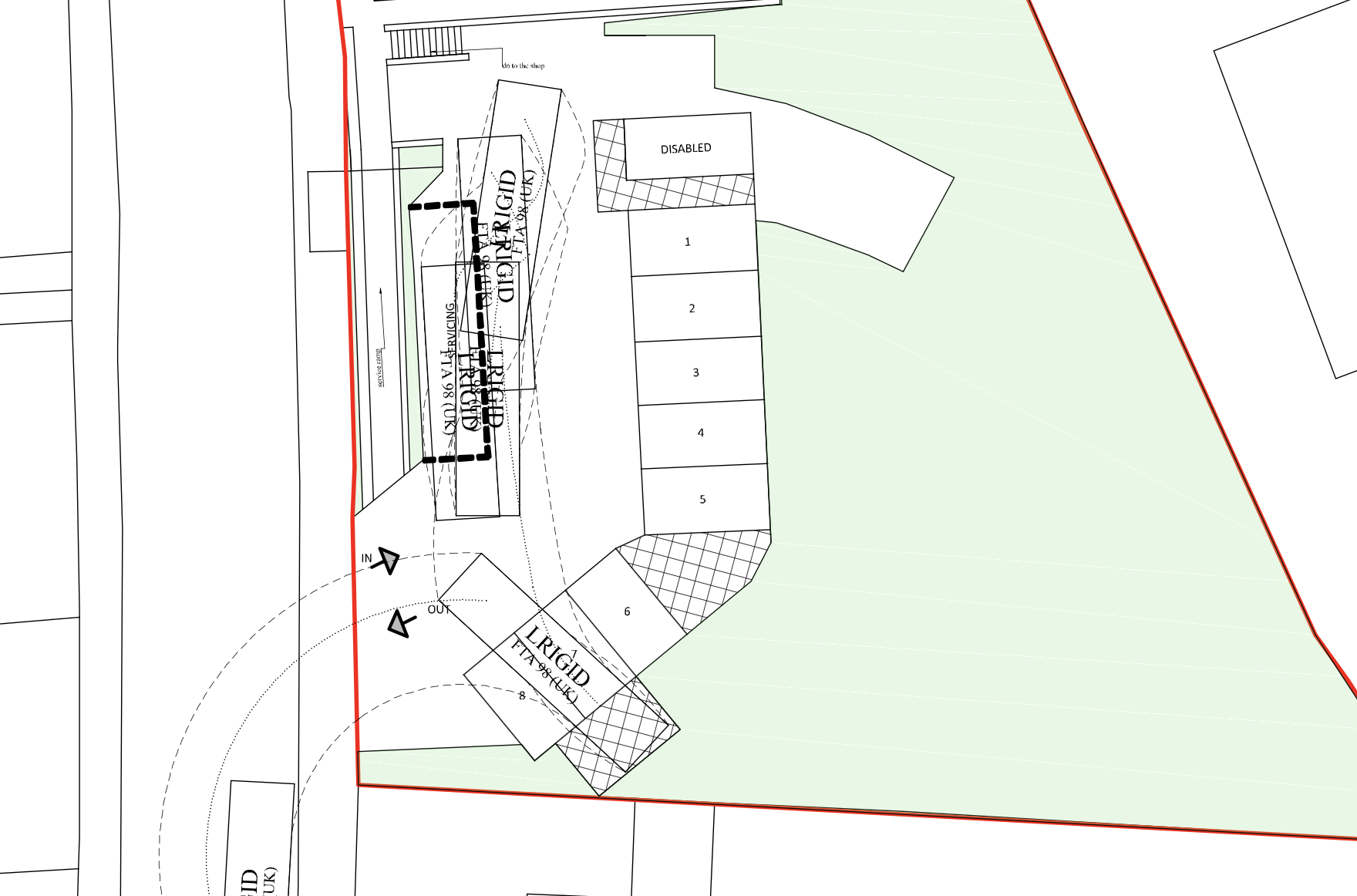
Swept path analysis showing vehicle tracking for a planning application prepared by DW Transportation.